Robotic vs Conventional Knee Replacement – What Actually Matters
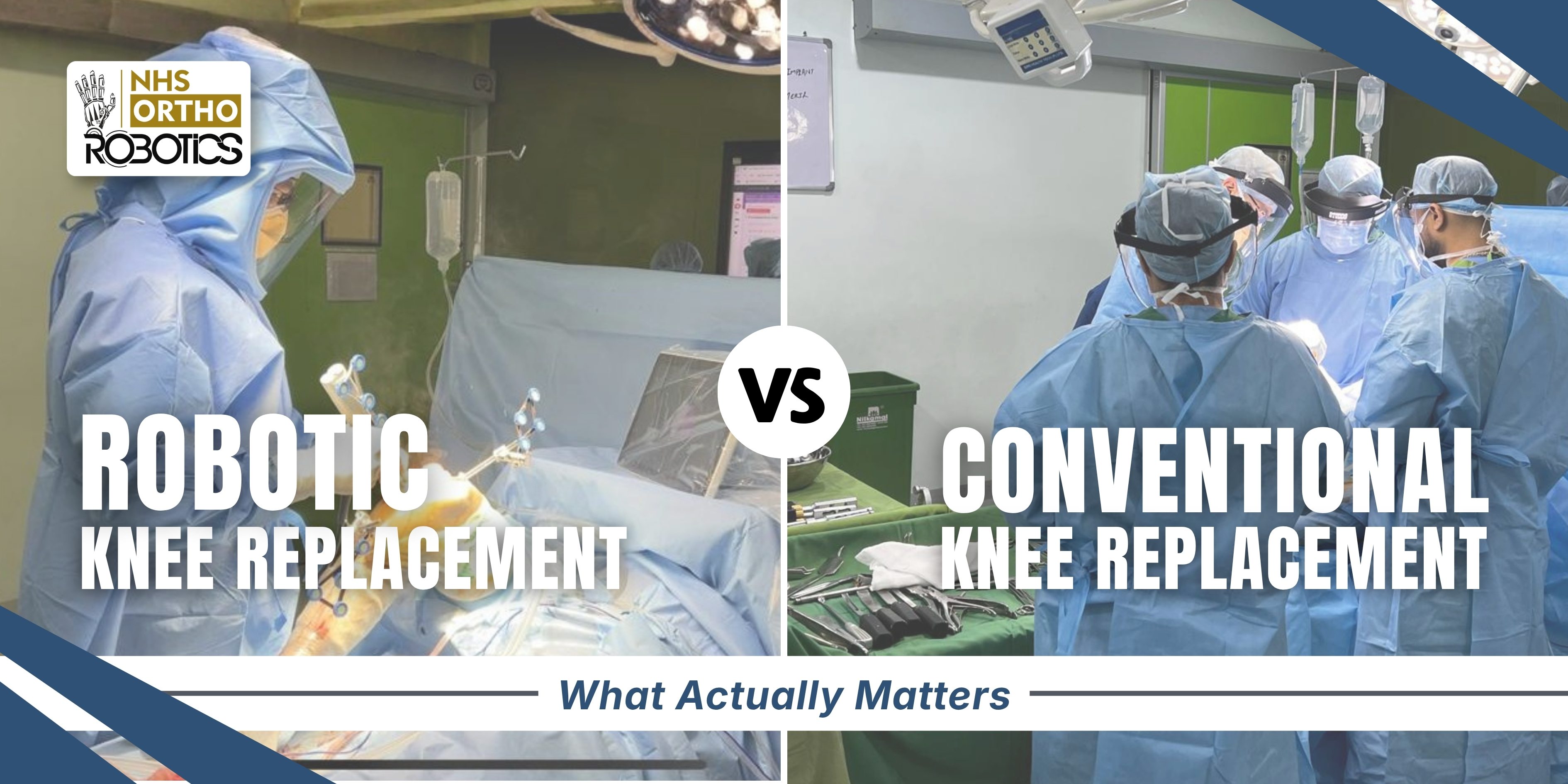
Core Takeaway: Robotic surgery provides the surgeon with digital planning and real-time alignment data, while conventional surgery relies on mechanical guides.
- Robotic platforms assist in reducing alignment outliers, helping custom-balance soft tissues.
- Conventional knee replacements, when performed by an experienced surgeon, still deliver highly successful, durable outcomes.
- Clinical decision-making and patient suitability are more crucial than the technology itself.
Introduction
With increasing awareness about advanced technology, many patients from Punjab, Haryana, Himachal Pradesh, and Jammu & Kashmir now ask:
"Is robotic knee replacement better than conventional surgery?"
The answer is not a simple yes or no.
Both robotic and conventional knee replacement are effective surgical methods. The goal in both is the same — to relieve pain, restore function, and improve quality of life.
The real difference lies in how the surgery is planned and executed, and more importantly, whether surgery is needed at all.
What Is Conventional Knee Replacement?
In conventional knee replacement, the surgeon performs the procedure using established techniques and instruments.
This approach relies on:
- Surgical experience
- Anatomical understanding
- Intra-operative judgement
It has been used successfully for many years with excellent long-term results.
What Is Robotic Knee Replacement?
Robotic knee replacement involves the use of computer-assisted systems that help in:
- Pre-operative planning
- Real-time intra-operative guidance
- Controlled and precise bone preparation
It is important to understand:
The robot does not perform surgery independently
The surgeon remains fully in control
At NHS Hospital Jalandhar, robotic systems are used as precision tools, not replacements for surgical judgement.
What Does Robotics Improve?
Robotic assistance can improve:
- Precision: More accurate bone cuts and implant positioning
- Alignment: Better restoration of joint alignment
- Balance: Improved ligament balancing
These factors contribute to consistency in surgical outcomes.
Not sure whether robotic knee replacement is suitable for you?
Get a clear, case-specific recommendation.
WhatsApp Reports Call Now Book AppointmentWhat Actually Determines the Outcome?
In clinical practice, the final outcome depends on:
- Correct diagnosis
- Proper patient selection
- Surgical technique
- Rehabilitation
Technology supports execution
But decision-making remains the most important factor
When Robotics Is Particularly Useful
Robotic-assisted surgery may be beneficial in:
- Complex knee deformities
- Partial knee replacement planning
- Cases requiring high precision
Learn more about Partial Knee Replacement →
When Conventional Surgery Works Well
In many standard cases, conventional knee replacement provides excellent results.
Not every patient requires robotic assistance
Common Misconception
Many patients believe:
"Robot surgery means better results automatically."
A simple way to understand:
Technology improves consistency
But outcomes depend on judgement and execution
Final Thought
Robotic knee replacement is an important advancement.
However, it is not the deciding factor in treatment.
The most important step is deciding whether surgery is required in the first place.
Frequently Asked Questions
Is robotic knee replacement better than conventional?
It improves precision but does not replace surgical judgement. Both are effective, choice depends on individual case.
Is robotic surgery necessary for all patients?
No. It depends on individual condition. Many patients do well with conventional knee replacement.
Does robotic surgery guarantee better results?
No. Outcome depends on multiple factors including diagnosis, patient selection, surgical technique, and rehabilitation.
Not Sure About the Right Next Step?
If you are experiencing knee pain or have been advised surgery and are unsure about the right timing, a proper clinical evaluation can help.
Call: +91 98142 09405 WhatsApp Reports Visit: NHS Hospital, JalandharCorrect diagnosis | Clear guidance | Right decision