Knee replacement is one of the most successful operations in orthopaedics. But the most important question is not how to do it—it is when to do it.
Our surgeons performing consistently well makes us too much trustworthy.
100% accuracy with high reliability rate, care, safety and excellence.
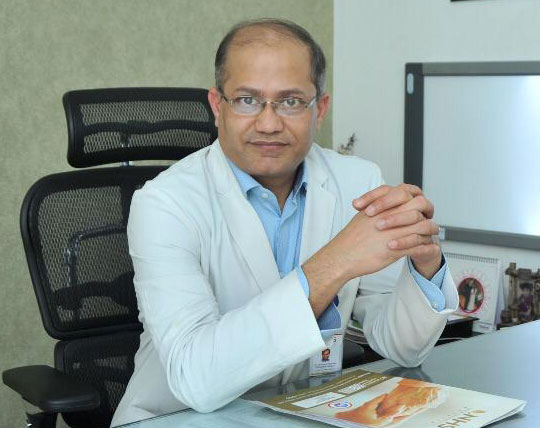
Dr. Shubhang Aggarwal is one in the top 11 robotic surgeons in india.

Many patients have arthritis on X-ray, but not all of them need surgery. The decision is based on symptoms and function, not just reports.
The most important question is not how to do it—it is when to do it.
Removing damaged cartilage and bone
Replacing it with a prosthetic joint
Restoring alignment and movement
Reduce pain
Improve mobility
Restore quality of life
Pain is persistent and daily
Walking, stairs, or sleep are affected
Medications and physiotherapy no longer help
Quality of life is significantly reduced
The key factor is how much the knee affects your life, not how bad the X-ray looks.
Pain is occasional or manageable
Daily activities are still comfortable
Non-surgical treatment gives relief
Symptoms do not match imaging severity
Physiotherapy
Lifestyle modification
Medical management
Correct timing is important. Too early is unnecessary, too late makes recovery harder.
A successful knee replacement is not just about placing an implant.
It requires:
Correct alignment
Balanced ligaments
Restoration of functional movement
Modern approaches aim to respect the patient's natural knee mechanics, rather than forcing a uniform alignment for everyone.
This is where surgical planning and experience matter.
Pre-operative planning
Precise bone cuts
Consistent alignment
Reproducible execution
When used appropriately, robotics improves accuracy and consistency.
The robot does not decide the surgery
It does not replace clinical judgement
It supports a well-planned procedure
Technology enhances good surgery—it does not define it.
After a properly indicated knee replacement:
Pain reduces significantly
Walking becomes easier
Daily activities improve
Confidence in movement returns
Most patients gradually regain independence over weeks to months.
Recovery includes:
Early mobilisation
Structured physiotherapy
Gradual strengthening
Improvement happens over time. Active participation in recovery is essential.
is a leading Robotic Knee Replacement Surgeon in India and is One of the Few Surgeons in the country. Only a handful of centres across the Asia Pacific have this revolutionary Robotic Cutting Edge Technology.
With an experience of more than 25+ years and more than 25000+ joint replacement surgeries under his belt, he is the first choice in this part of the country for such complex knee joint medical procedures.
He has advanced training in joint replacement from prestigious medical colleges and universities in the UK, France, Germany, Australia, and Singapore.
Knee replacement is highly effective when done at the right time for the right patient.
The decision should always be:
Thoughtful
Individualised
Based on real need
The goal is not simply to replace a joint, but to restore meaningful function and comfort.
This is not a surgery to be offered routinely—it is a surgery to be offered responsibly.
If knee pain is affecting your daily life and you are unsure whether surgery is required, a clinical evaluation can help determine the right timing and treatment approach.
Modern knee replacements can last 15-20 years or more. Longevity depends on factors like patient activity, weight, and implant quality. Regular follow-ups help monitor implant function.
Consider surgery when pain limits daily activities, sleep is disturbed, and non-surgical treatments no longer provide relief. The decision should be based on symptoms, not just X-ray findings.
Pain management has improved significantly. Most patients experience manageable discomfort that improves steadily. Early mobilisation and physiotherapy help reduce pain and speed recovery.
Most patients stay 2-4 days in hospital. With enhanced recovery protocols, early mobilisation is encouraged within 24-48 hours after surgery.