Our orthopaedic team is dedicated to prevent, diagnose, and treat disorders of the bone, joint, ligaments, tendons, and muscles.
Our surgeons performing consistently well makes us too much trustworthy.
100% accuracy with high reliability rate, care, safety and excellence.
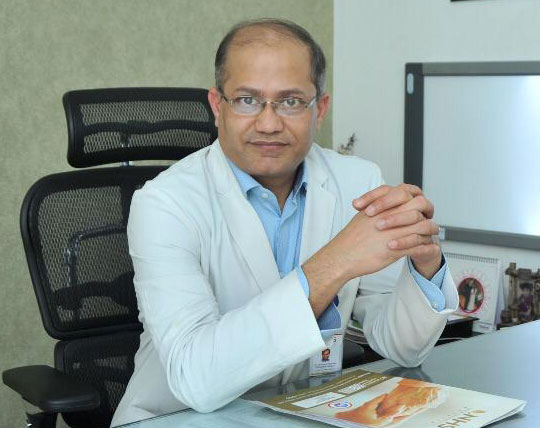
Dr. Shubhang Aggarwal is one in the top 11 robotic surgeons in india.
State-of-the-art surgical procedures for comprehensive musculoskeletal care.
Using patient's own stem cells and growth factors for tissue repair.
Cartilage Vijender is a procedure done by us using the patient's own stem cells and growth factors to help repair the damaged tissue, reduce the pain, and promote healing. Either fat or bone marrow cells are taken from patient's own body, processed, and injected into their joint or tendon.
Uses patient's own stem cells.
Cells are processed and prepared.
Injected into damaged area.
Natural healing approach using your body's own regenerative cells.
Replacing damaged cartilage with juvenile cartilage.
Cartilage transplant repairs the damaged cartilage with replacement of juvenile cartilage. Cartilage replacement is conducted by mixing donated cartilage and fibrin glue and forming a patch of the appropriate size which is then inserted with a small surgery into the damaged area.
Donor cartilage is mixed with fibrin glue
Patch is formed to appropriate size
Minimally invasive insertion surgery
Targeted to damaged area
Natural cartilage replacement
Minimally invasive procedure
Reduced recovery time
Long-lasting results
Minimally invasive approach to hip conditions.
Hip arthroscopy is a minimally invasive way to access the hip used to repair conditions of the hip, take care of your pain, and possibly prevent or delay the onset of arthritis. It is also used to repair torn tissue and labrum on the rim of the hip socket.
Small incisions for less trauma.
May prevent or delay arthritis.
Repairs torn labrum and tissue.
A advanced technique to preserve the hip joint and avoid replacement.
Stabilising joints using natural or artificial ligaments.
Ligament reconstruction surgery for hip, knee, ankle, shoulder, or elbow can stabilise the joint and is done routinely using natural tissue from the human body itself or using an artificial ligament.
Hip, knee, ankle, shoulder, elbow.
Provides joint stability.
Replacing damaged meniscus with donor cartilage.
Meniscal transplant can offer significant pain relief and is used to replace the damaged meniscus with donor cartilage. This procedure helps restore proper meniscus function and can prevent further joint degeneration.
Significant pain relief
Restores meniscus function
Prevents further degeneration
Donor cartilage replacement
Young active patients
Prior meniscus removal
Persistent knee pain
Sports injuries
Changing bone alignment for better weight distribution.
Realignment or Osteotomy surgeries are done by cutting the bone and changing their alignments to provide better weight transfer across the joints. This helps redirect stress from damaged areas to healthier parts of the joint.
Surgical bone realignment.
Changes joint alignment.
Better weight distribution.
Osteotomy can delay or prevent the need for joint replacement.
is a leading Robotic Knee Replacement Surgeon in India and is One of the Few Surgeons in the country. Only a handful of centres across the Asia Pacific have this revolutionary Robotic Cutting Edge Technology.
With an experience of more than 25+ years and more than 25000+ joint replacement and sports injury surgeries under his belt, he is the first choice in this part of the country for complex knee procedures.
He has advanced training in joint replacement and sports medicine from prestigious medical colleges and universities in the UK, France, Germany, Australia, and Singapore.
If you need surgical treatment for your musculoskeletal condition, schedule a consultation with our expert team.
Recovery time varies depending on the procedure. Cartilage Vijender may allow faster recovery, while cartilage transplant typically requires 6-12 weeks of rehabilitation.
Meniscal transplant is typically recommended for younger patients with significant meniscus damage who remain symptomatic despite conservative treatment.
Osteotomy preserves the patient's own joint and can delay or even prevent the need for joint replacement, especially in younger, active patients.
Recovery varies per patient. Most patients can return to sports within 3-6 months after dedicated rehabilitation.